PUBLISHED · GUIDE 16 OF 18
Distinct special-card forms
Photographed SignaGraph, relic, SignaPatch and dimensional examples. A printed character SignaGraph is not evidence of a real-person autograph.
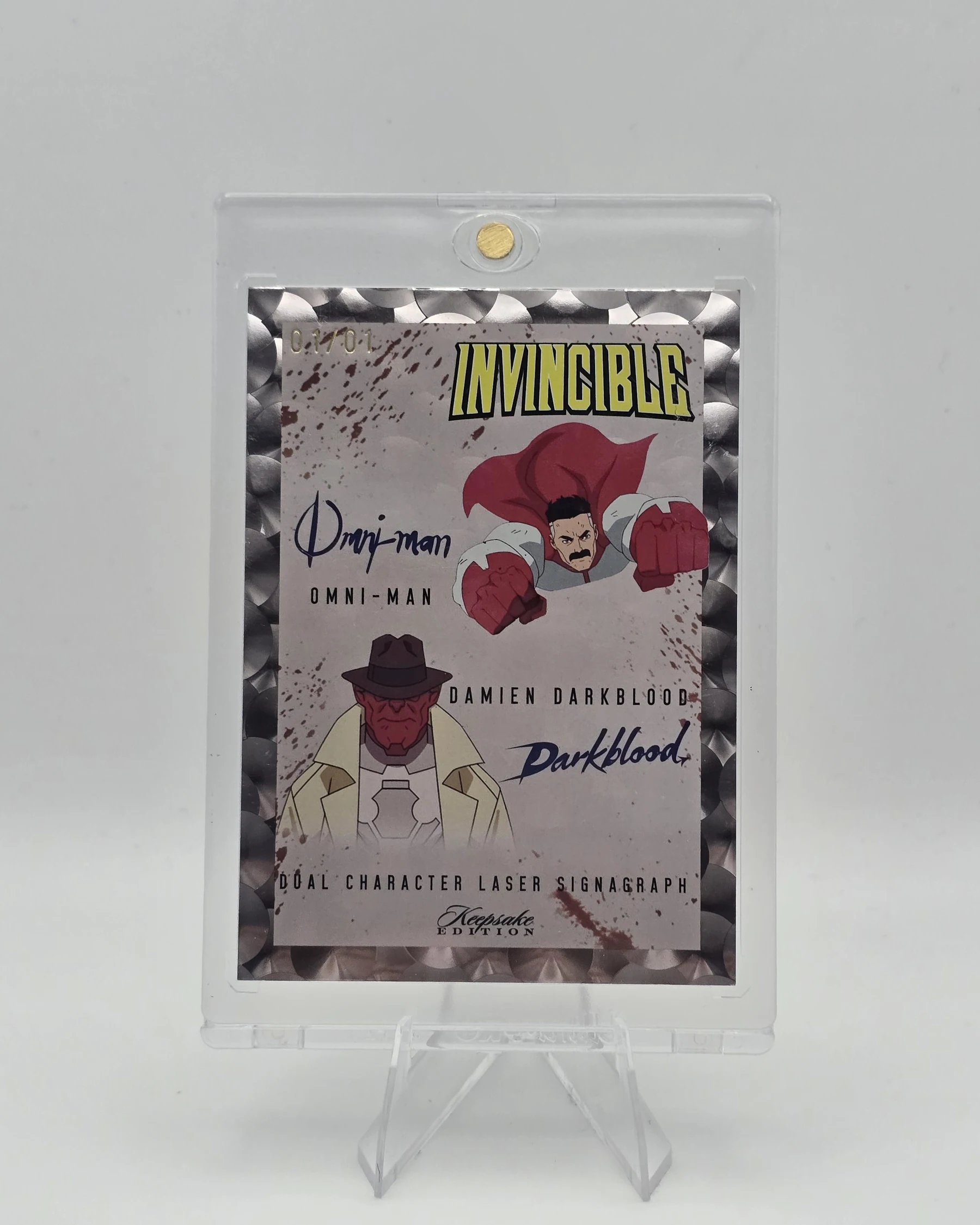
Character SignaGraph design.
Examine this item ↗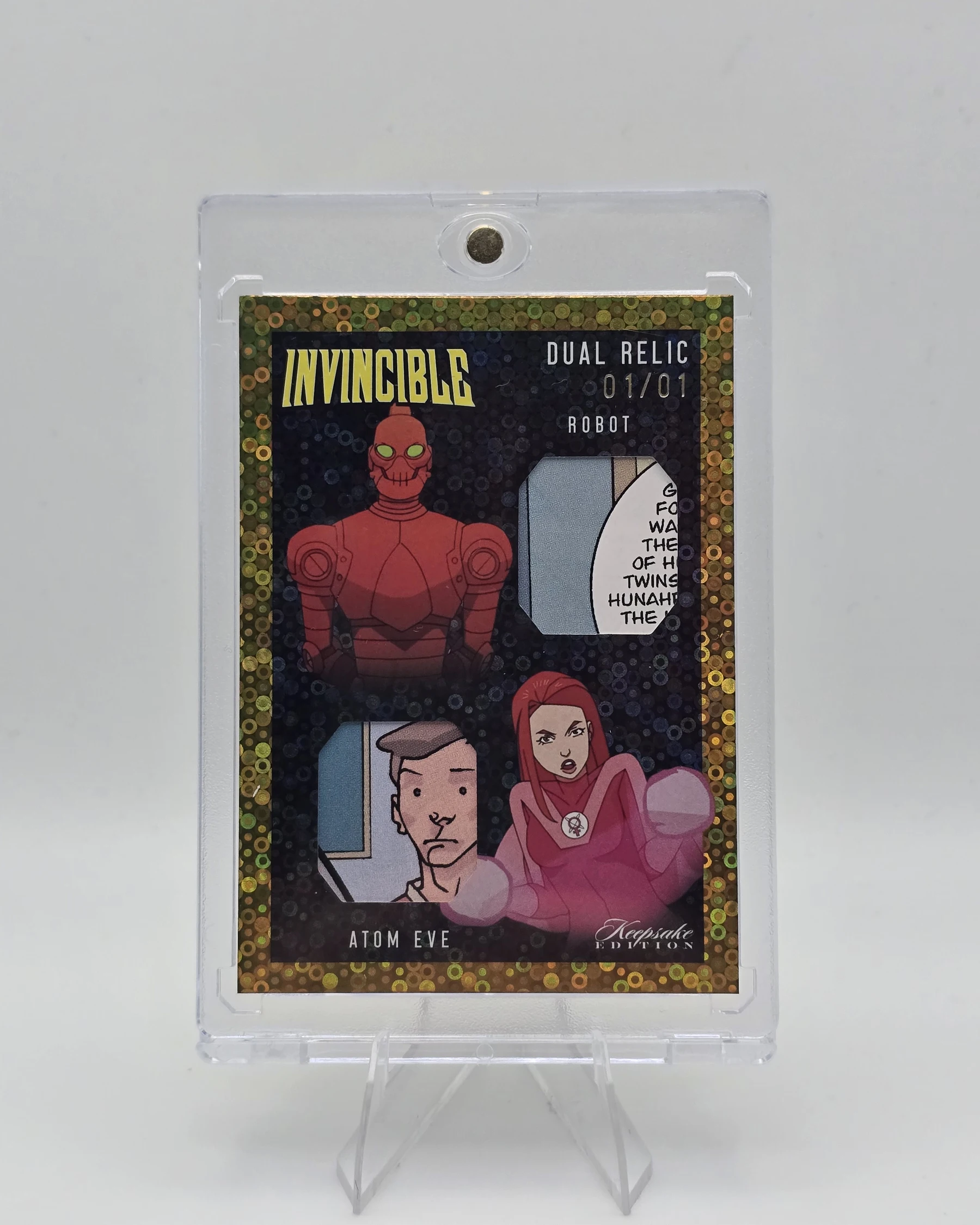
Authentic Dual Relic category; confirm material on the exact card.
Examine this item ↗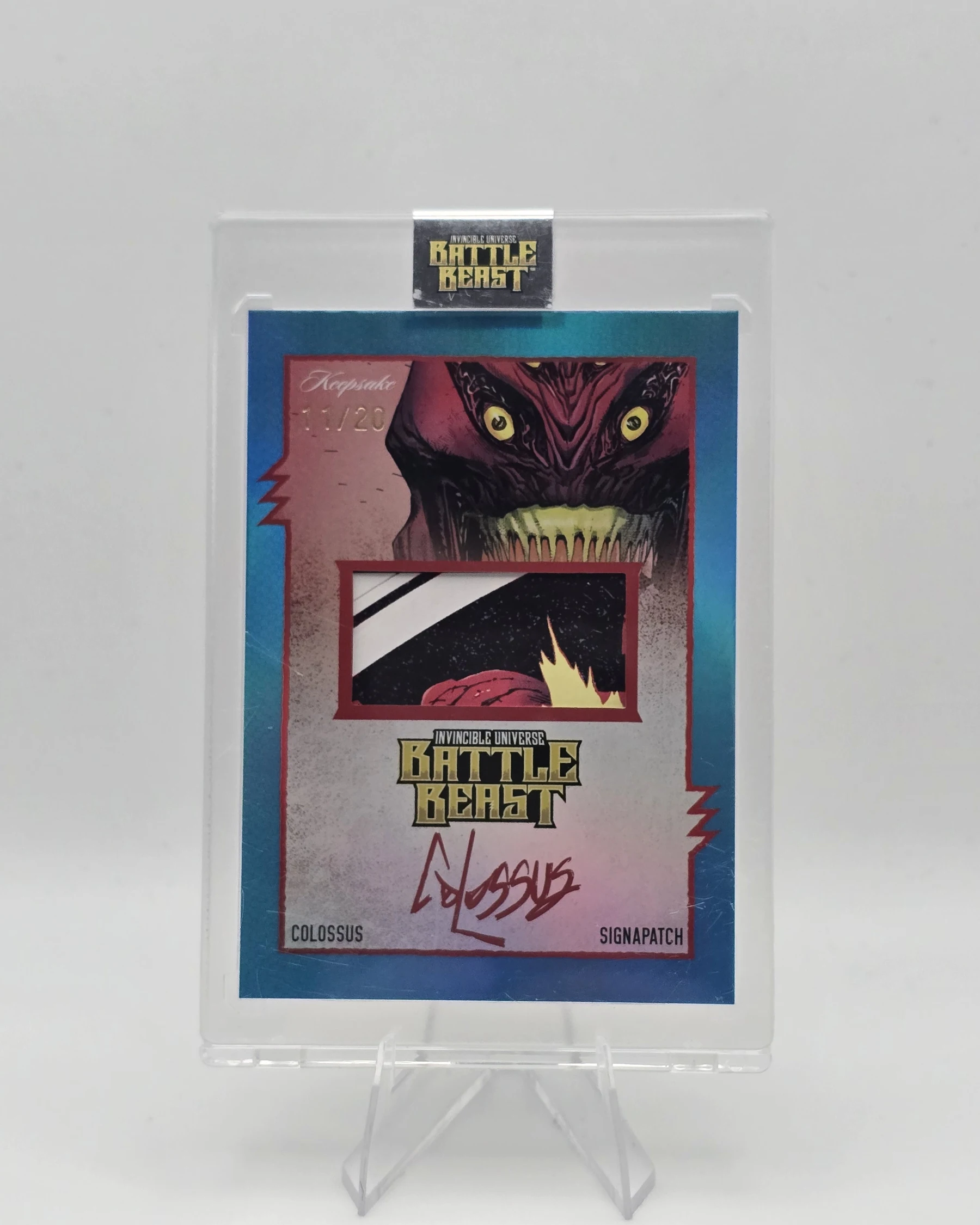
Battle Beast Spotlight SignaPatch; 11/20 does not name a color.
Examine this item ↗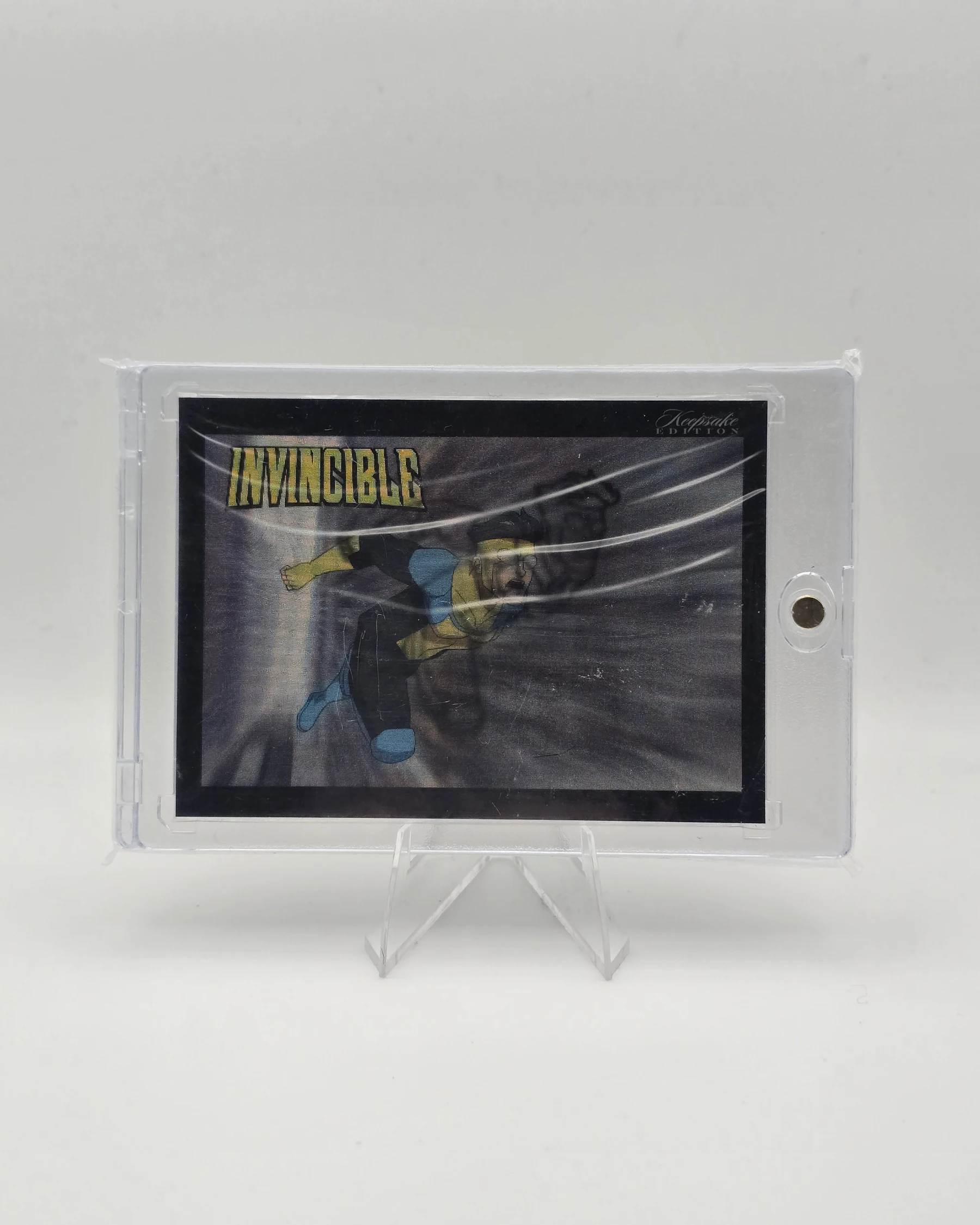
Dimensional card example.
Examine this item ↗Start with a named card family, not the word 'hit'
A seller's 'hit' can mean a numbered parallel, a SignaGraph, a relic, a sketch, a three-dimensional insert or something else entirely. Keepsake uses different names for its product families, and those names matter because they describe different card construction and different checklists. Identify the release, card number, exact printed wording and serial stamp before comparing cards. A sketch card should not be described as if it were a Laser SignaPatch.
Photographs should show the complete front and back with every printed edge intact, plus a closer view of the serial stamp, autograph area or embedded material. A clear image documents what is present; it does not by itself establish who signed a card, which comic issue supplied a fragment, or the odds of pulling that particular copy. For those claims, prefer the manufacturer's product language and checklist.
SignaGraphs and creator autographs are not interchangeable labels
Keepsake describes Season 1 Premiere SignaGraph autograph cards in single, dual, triple and quad configurations, and describes Laser Signagraph cards in Holo formats. Season 2 Premiere separately advertises randomly inserted on-card autographs by creators Robert Kirkman and Ryan Ottley. Battle Beast Spotlight also advertises rare cut signatures by those creators. These are distinct manufacturer claims: identify the actual card's signer, inscription and type before calling a particular listing a creator autograph.
Check how many subjects the card depicts, how many signatures are present, whether the signature is printed, stickered, on-card or a cut-signature piece, and what the card back says. Do not assume that a card featuring a television character was signed by that character's voice actor. Ask for close photographs and the relevant checklist entry; if authenticity is pivotal, distinguish manufacturer certification from an independent autograph-authentication service.
| Label encountered | Question to ask | Evidence to request |
|---|---|---|
| Single, dual, triple or quad SignaGraph | Does the designation count subjects, signatures or both for this checklist entry? | Front, back, autograph area and manufacturer checklist row |
| Creator on-card autograph | Is the autograph attributed to Kirkman or Ottley on this exact card? | Signer identification and close image of the signed surface |
| Cut signature | Is a signed piece embedded in the card, and who is identified as signer? | Full card photos and manufacturer's issue description |
Relics and SignaPatches: identify the material
Season 1 Premiere's product description names relics containing original Invincible comic-book pieces, Season 1 hand-drawn animation artwork and animation film cells. It separately describes Laser SignaPatch autograph relics using original pieces of particular comic issues. Season 2 Premiere lists Relics and Laser SignaPatch as separate numbered checklist ranges, plus an Atom Eve Issue #1 SignaPatch outside those ranges. The construction and source material differ by card: a general 'comic relic' label loses that detail.
Read the back for an explicit material or issue statement and compare it with the manufacturer checklist. A mention of Invincible #1 on the product page describes a chase opportunity, not proof that any given relic includes that issue. If a comic fragment is central to your purchase, ask for an uncut back photograph, a close view of the embedded piece and any printed provenance language. Be wary of inferred comic grades: the source comic's grade, if stated, does not grade the finished trading card.
Sketch cards and dimensional inserts
Keepsake's Season 2 Premiere page advertises randomly inserted 1/1 Invincible art sketch cards. Battle Beast Spotlight lists 3D/4D inserts and says they occur at one in every hundred boxes on average. Season 2 also names a 3D/4D SSSP insert in its checklist overview. These statements belong to their named products; they do not give a universal 4D pull rate for every Invincible release.
For a sketch, identify the release, artist attribution if printed, serial designation and artwork on the exact card. Original drawings can vary significantly; do not treat a gallery image of another sketch as a photograph of yours. For 3D/4D, inspect both sides and ask the seller to show the optical or layered effect from more than one angle. A static scan may hide scratches or an effect visible only when tilted. Confirm the insert name against the relevant checklist rather than assuming every dimensional-looking card is the same subset.
Understand the difference between odds and guarantees
Keepsake's Season 1 Premiere Hobby copy says two relics per box, while its special chase odds refer to much larger numbers of packs and boxes. The Holo Breaker page gives several hit frequencies as averages per ten-box case and explicitly says they are not guaranteed in any individual box. Battle Beast Spotlight states one encased card numbered /50 or less per box, but lists its SignaPatch and 3D/4D frequencies as averages. These are three different kinds of statements.
An average such as one in fifty boxes does not mean that buying fifty boxes guarantees the insert. Likewise, a sealed-box promise of a numbered card does not promise a particular character, numerator or condition grade. Read the current manufacturer's wording for the exact SKU and compare the printed packaging when possible. Opening a box changes it from sealed inventory to identified singles; record that change so neither category is misleadingly represented.
Compare special cards with a repeatable record
Create one row per exact card with release, format, checklist number, subset, subject, autograph signer if verified, relic material if printed, artist if named, serial number and condition. Add a link to the manufacturer's checklist and separate fields for a seller's claims versus what the card itself proves. If the image does not show a critical claim, leave that field unverified until the seller provides evidence.
When evaluating a chase, compare like with like. Two /10 cards can differ in subject, design, material and condition. A unique sketch offers artwork no other copy exactly matches; a SignaPatch may appeal for comic provenance; a multi-subject autograph may appeal to character collectors. There is no factual single ordering of those preferences. Prefer an accurate description and strong photographs to a dramatic but unsupported 'rarest ever' superlative.
- Keep exact-card photographs alongside the checklist entry.
- Identify the signer and relic material only when the printed card or primary source establishes them.
- Treat manufacturer averages as probabilities, never guarantees.
- Separate your personal chase ranking from documented serial scarcity.
Sources and checklists
Check manufacturer pages and official references for the current product details. Inventory and condition are confirmed for a specific item before purchase.