
PUBLISHED · GUIDE 17 OF 18
A grail is an exact version
One photographed red foil 1/1. Verify the named release, treatment, serial and condition before comparing another listing.
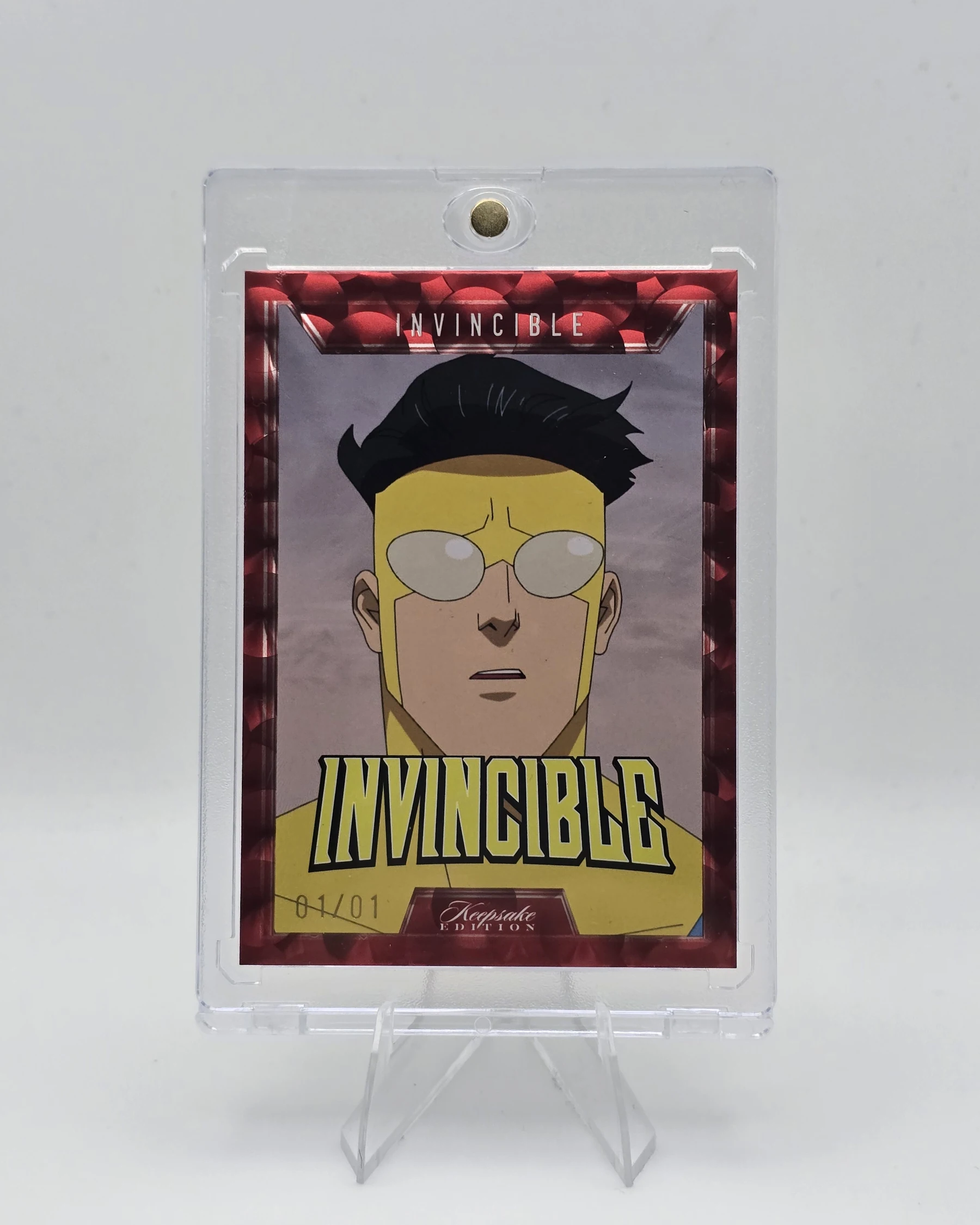
Front: identify the variant and artwork.
Examine this item ↗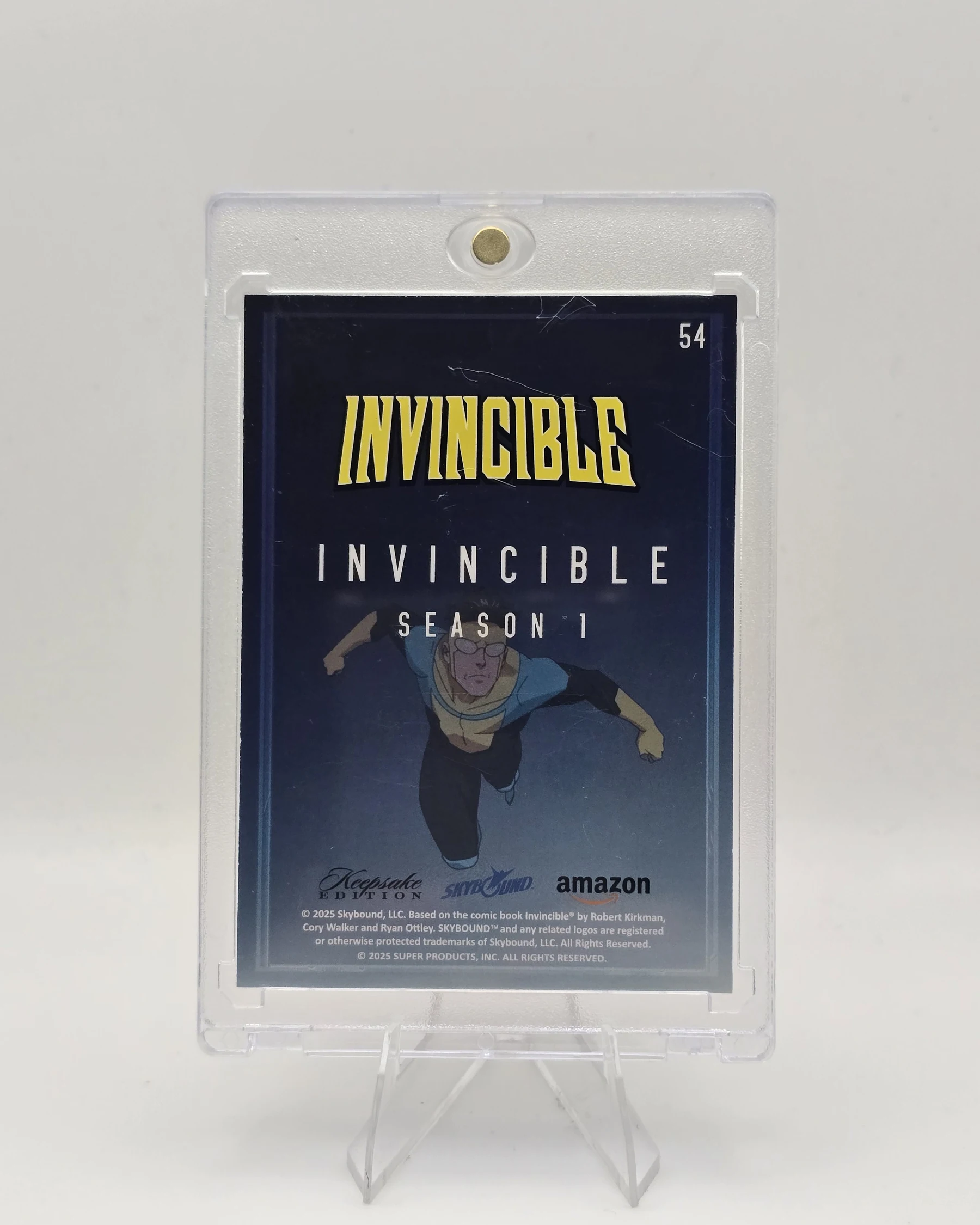
Reverse: compare the same physical copy.
Examine this item ↗Define what 'grail' means in your collection
Grail is a collector's term for a personally significant target, not a grade or a manufacturer's official rarity tier. One collector may chase the first card of Atom Eve in a release; another may prioritize a Battle Beast sketch, a comic-fragment relic or a particular scene on a modest base card. Write down the subject and why it matters to you before searching. Otherwise, whichever card has the loudest listing title can quietly become your goal.
For an evidence-based shortlist, describe each target by release, year, subset, card number, parallel or insert name, exact serial tier and the visual detail you want. Distinguish a card you already own from a card that merely appears in an archive. A low-denominator card may be scarce without being the version you personally prefer, and a beautiful unnumbered card can still belong in a meaningful collection.
Choose a rainbow's boundaries before you chase it
A character rainbow is a collection of distinct parallels of the same underlying card. The strictest version holds the same release, subset, card number and image constant, varying only the finish or color. A broader character collection can include multiple card numbers, inserts and seasons, but it should not be counted as one manufacturer's complete rainbow. Topps describes parallels as versions running alongside a base design; that makes card identity the organizing principle.
For example, select one Battle Beast Spotlight design and list the versions the manufacturer names: Blood Splatter /50, Orange /25, Blue /20, Red /15, Gold /10 and Black 1/1. Do not assume that every Spotlight SignaGraph, 3D/4D insert or SignaPatch uses this exact same ladder. If the checklist says a version does not exist for your selected design, mark it unavailable rather than leaving a permanent 'missing' slot.
| Field | Record | Why it matters |
|---|---|---|
| Identity | Release, subset, card number, pictured subject | Prevents visually similar cards from other sets entering the same rainbow |
| Version | Exact parallel name and finish | Separates color from a different insert or image variation |
| Number | Full stamp such as 03/25, or 'unnumbered' | Documents the individual copy and stated denominator |
| Evidence | Front/back photos and official checklist link | Makes the identification reproducible |
| Status | Owned, located, searching, or unconfirmed | Prevents wish-list cards from looking like owned inventory |
Scarcity is documented one version at a time
On a card stamped 03/25, the 25 describes the stated print run of that particular version; 03 identifies this copy. It does not say that only 25 cards of the character exist. A Black 1/1 in one release does not rule out a different Black Gold 1/1, a sketch 1/1 or a one-of-one in a later product. Make the full identifying phrase visible whenever discussing scarcity.
Season 2 Premiere lists Silver, Red, Blue, Yellow, Gold, Black and Black Gold, but the overview does not assign a universal print-run denominator to each color. Treat any unsourced color-to-number chart as provisional. Manufacturer checklists, the serial stamp on the exact card and the card's own product identity are stronger evidence than a title copied through multiple reseller listings.
Rank targets without claiming an investment return
A useful grail scorecard can consider personal attachment, confirmed scarcity of the exact variant, design or artwork, condition, provenance, how frequently examples actually appear for sale and your maximum comfortable spend. Keep each dimension separate. If a card is scarce but damaged, that may still be perfect for an affordable personal collection; if it is pristine but represents a character you do not collect, its serial number alone does not create a personal grail.
Set a limit before a live auction or convention. Include tax, shipping, currency conversion and grading costs if those apply to you. A seller's asking price, a site's reference value and an actual completed sale are three different facts. A high ask can remain unsold for months; one exceptional auction result may be an outlier. You are making a collecting choice under uncertainty, not calculating a guaranteed future return.
Research sold comparisons in layers
Search completed sales using the exact release, card number, character, parallel and serial denominator. eBay says its Product Research tool can show actual transaction prices, including accepted Best Offers, and search up to three years; ordinary recently completed results cover a shorter window. Save the sale date, condition, grade, venue and whether the same card actually changed hands. Compare raw with raw and the same grader and grade with like examples where possible.
For a rare 1/1, an identical sale may not exist. Use adjacent versions as context, and say plainly that you are estimating rather than quoting a direct comp. Consider changes in collector interest and availability between the sale date and today. Avoid an average built from unrelated character cards or mixed releases. Where only a few sales exist, report a range and the differences between them rather than presenting a precise 'market value'.
- Match the year, release, subset, number and parallel first.
- Record whether the sale involved the exact card, a nearby tier or only a similar character.
- Note damage, grading service and date beside every price.
- Keep listings with no verified sale out of a completed-sales average.
Contact a seller about the exact copy
Ask for current, uncropped front and back photographs that show every original card edge, a close image of the stamp and any autograph or relic area, and disclosure of scratches, corner wear or altered surfaces. For an encased or graded card, request the label and certification details. Confirm whether the card pictured is the card shipped, whether a box is truly sealed, and the actual price and shipping terms. A stock photo or another copy from the same run cannot establish this copy's condition.
Keep a short collection log after purchase: source, date, cost, card identity, serial stamp, condition observations and a safe copy of the photos. The log helps you avoid accidentally buying a duplicate and makes a later trade or insurance discussion clearer. When you photograph your own cards for display, align images in the site layout while leaving the complete card and a margin of its original photographic background visible; visual consistency should not remove printed edges or imply restoration.
Sources and checklists
Check manufacturer pages and official references for the current product details. Inventory and condition are confirmed for a specific item before purchase.