
PUBLISHED · GUIDE 1 OF 18
Start with the actual card
A photographed /10 example. Inspect both sides before recording its release, design and serial number.
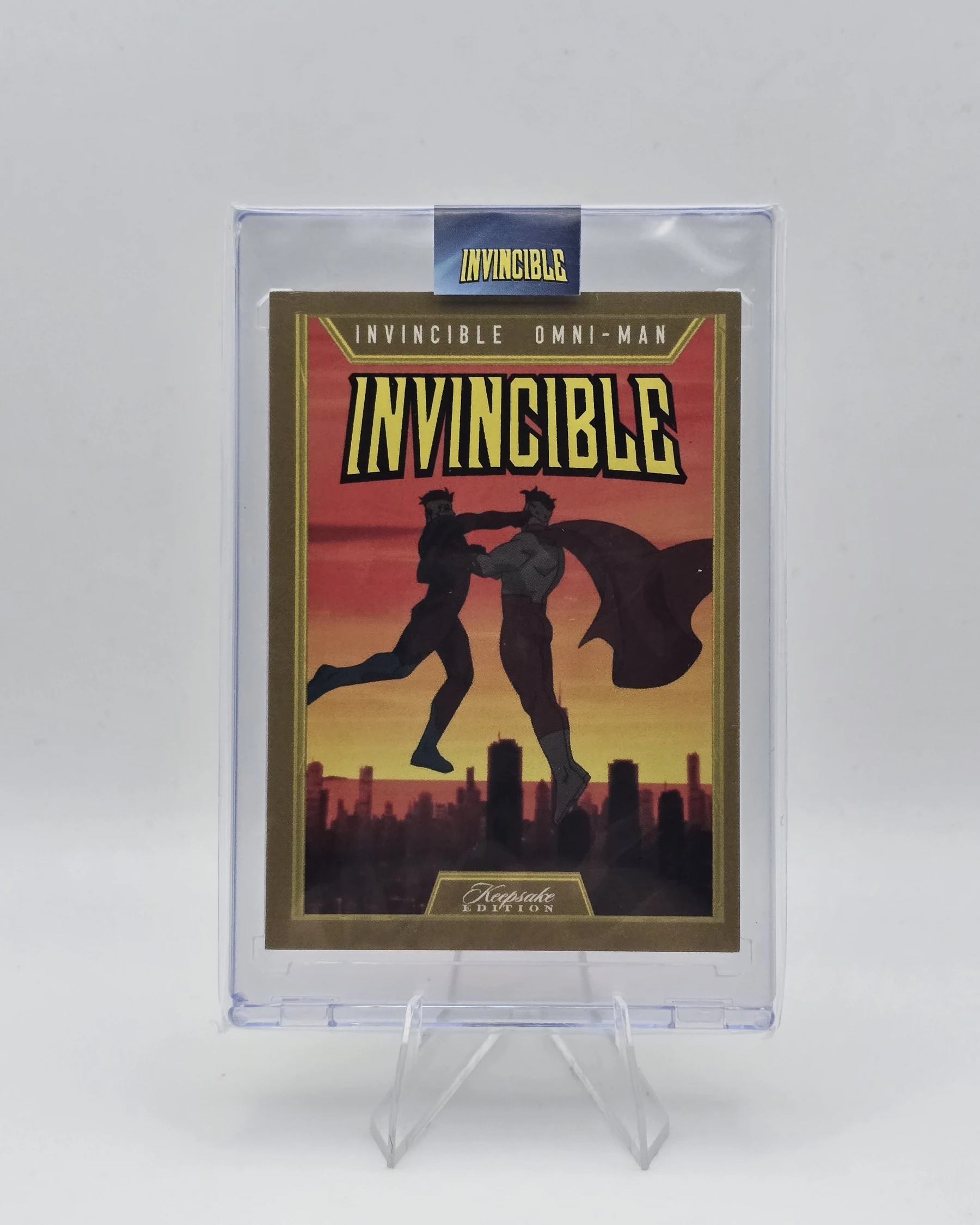
Front: identify the subjects and card design.
Examine this item ↗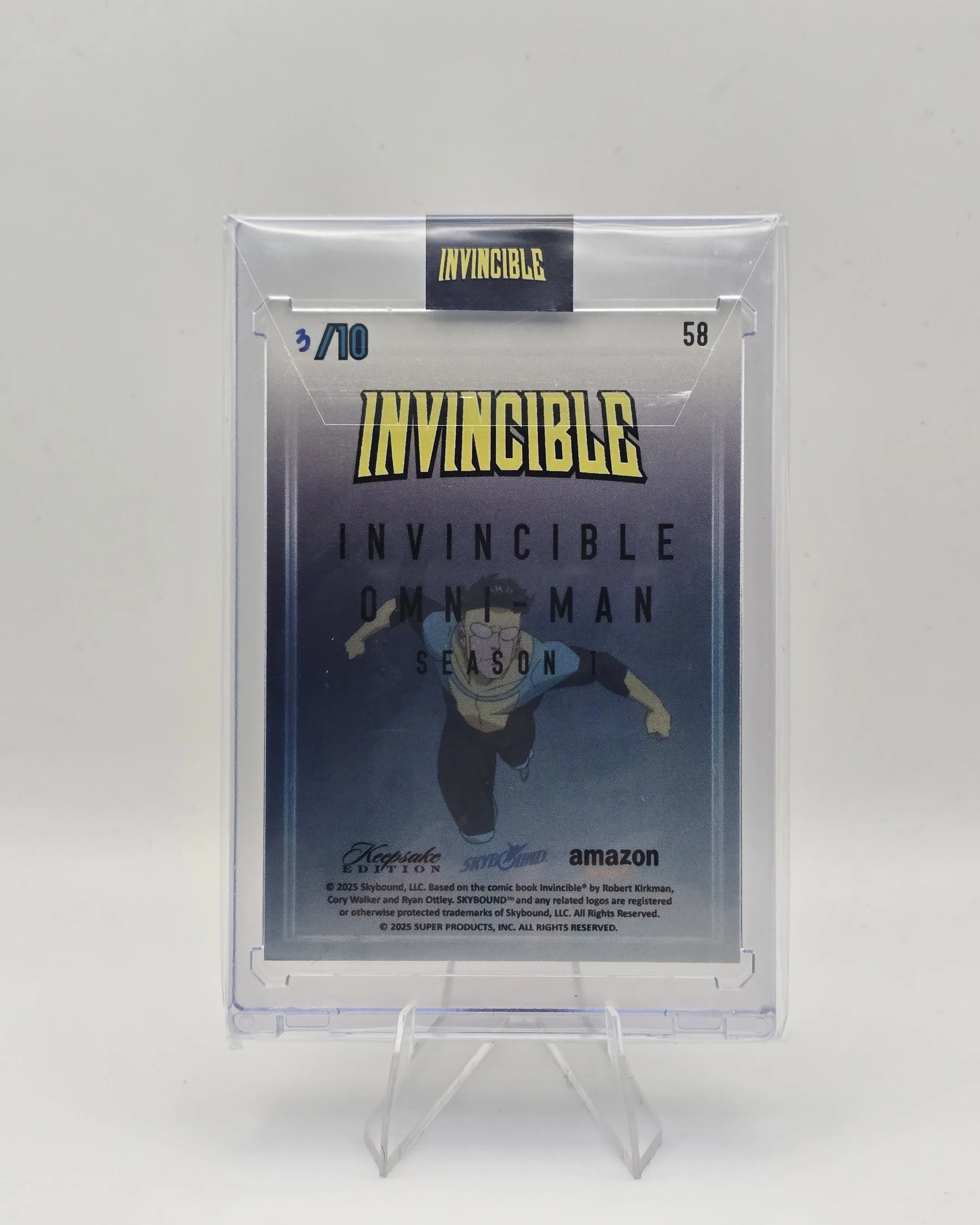
Reverse: check the printed details on this copy.
Examine this item ↗Decide what a successful collection means to you
A collection becomes easier to build when it has a boundary. You might follow one character, finish a particular base checklist, collect one parallel type, preserve sealed boxes, or choose one card from each release. Write down your goal before shopping. 'Every Invincible card' sounds simple, but base cards, inserts, signed cards, relics, event exclusives and several numbered versions can make that goal much larger than expected.
Start with one affordable lane. An Atom Eve character run or a Season 1 base set is a clearer project than buying every appealing box. Set a spending limit for the project and a separate maximum for one card. A card can be personally important without being rare, and rarity alone does not make it right for your collection. Revisit your goal when you learn more; the point is to make your next purchase deliberate.
Learn four words before comparing listings
A release is a named product family, such as Season 1 Premiere or Battle Beast Spotlight. A format describes how that product is sold: blaster, hobby, breaker, Spotlight, convention mystery box or an already opened single. A checklist identifies card subjects and categories within a release. A parallel is a version of a particular card with a changed treatment, often a colour and sometimes a serial-numbered print run. These labels answer different questions, so do not substitute one for another.
Keepsake's Season 1 Premiere Blaster product, for example, describes packs and a broad checklist, while its Battle Beast Spotlight product describes one encased numbered card per box. Both belong to the Invincible collecting universe, yet they are very different purchases. Look for the complete release and format name on packaging and in the seller's description before using a checklist to identify a card.
| Term | Question it answers |
|---|---|
| Release | Which product family made the card? |
| Format | How was it packaged or sold? |
| Checklist | Which card design or subject is it? |
| Parallel | Which version of that design is it? |
Choose a set by its actual subject and size
Season 1 Premiere covers a broad cast and multiple card categories. Season 1 Holo is another product family, offered in Breaker and Hobby formats. Battle Beast Spotlight focuses on Battle Beast. Season 2 Premiere has its own checklist, and Invincible VS is tied to the game rather than being another television-season checklist. The words 'Season 1' or 'Season 2' alone cannot identify the exact product.
Read the manufacturer's current product page and any linked official checklist. Count base cards, inserts and variants separately. A published 600-card checklist is a count of checklist positions, not a count of 600 different characters or every physical parallel. This site also has a personal archive: it shows examples and records held by a collector, not a complete manufacturer checklist. Use that archive to see real cards, then use official product information to define your collecting target.
Choose singles or sealed boxes with different expectations
A single is the direct route to a specific character, finish, or serial number. You can inspect the pictured front and back before deciding, though you still need to confirm condition and that the listed card is the card you will receive. A sealed product buys an unopened format and its possible contents. Its outer design and advertised card tier can be known while the precise character and serial stamp inside remain unknown.
Box language deserves a careful reading. Keepsake says Season 1 Holo Breaker has two hits per box but describes other chase rates per case and says those case averages are not guaranteed in an individual box. Battle Beast Spotlight explicitly describes one encased Battle Beast card numbered to /50 or fewer. These examples show why a box's stated configuration and its chase possibilities must be read separately. Buy sealed for the experience or for sealed collecting; buy a pictured single when the exact outcome matters most.
Identify the exact card, not just its character
Save a simple identity line for each card: release, card number or insert name, character, parallel name, serial stamp and condition notes. A listing titled 'Invincible gold' is incomplete: gold can mean different things in different products, and a gold-looking surface is not proof of a /10 stamp. An example such as 03/20 identifies one copy as number three within a stated run of twenty for that version; it does not tell you how many other Invincible designs exist.
Ask for uncropped, in-focus pictures of the entire front and reverse, plus a close view of any serial number or signature. Check that the printed border remains visible at every edge. Compare the treatment and stamp with the applicable checklist or official product description. Do not infer authenticity, grade, or rarity from a compressed listing thumbnail. If the available photos cannot resolve a claim, put the purchase on hold until the exact card is documented.
Use a repeatable first-purchase checklist
Before paying, record the seller's exact item description and check the full delivered cost: price, shipping, applicable tax and any import costs that could apply. Ask whether a card is the photographed copy, whether a box is the photographed sealed unit, and how the seller will protect it in transit. Verify the current availability and terms in writing. A seller's asking price is a proposal, not a verified market value, and a reference value in a personal archive is not a live offer.
If you are comparing offers, compare like with like: same release, exact version, stated grade or condition, and actual serial tier. A graded example and a raw card with a soft corner are not equivalent merely because both show the same character. Resist urgency created by an unsupported 'only one left' claim. If an expensive card is central to your collection, spend more time confirming the identifying details than looking for a slightly lower headline price.
- Confirm the full release, card or box format, and stated contents.
- Get complete front and back photos or exact-box seal photos.
- Confirm condition, total cost, shipping method and seller terms.
- Save the listing details and communication before the transaction.
Protect your cards and keep the original image
Handle an unencased card carefully by its edges and use a clean protective sleeve that fits its thickness. PSA's submission guide describes a clear soft sleeve inside a semi-rigid holder for cards being sent for grading; always follow the current instructions of the service you choose. Keep loose cards away from direct sun, liquids and rough surfaces. An encased or factory-sealed piece has different handling needs: document its case and seal before changing anything.
Make your own record with an uncropped image that includes all four physical edges, plus a reverse image and a separate close view of the number. A cropped social-media image may look tidier, but it can hide a damaged corner, cut off the serial mark or remove the background needed to judge the true border. Store the original photographs and write down where the card came from. Good records help you avoid buying a duplicate and make a future condition discussion much easier.
Build outward one question at a time
After a few purchases, review what actually gave you satisfaction. If your favourite part is recognizing artwork, a base or insert run may suit you. If you enjoy a particular finish, follow that parallel through one release and note which cards actually exist. If a unique grail is the goal, learn to verify the exact version and its provenance before paying a premium. You do not need to collect every set to be a serious collector.
A useful collection sheet has fields for release, format, card identifier, character, parallel, serial number, purchase date, actual cost, photograph link and condition notes. Leave a field blank when the fact is unknown. Update your checklist from official sources as new releases are announced; do not turn a planned product or a partial personal archive into a claim of a complete master set. From this foundation, the next guides explain how the releases fit together and how to read their parallels.
Sources and checklists
Check manufacturer pages and official references for the current product details. Inventory and condition are confirmed for a specific item before purchase.