
PUBLISHED · GUIDE 2 OF 18
Product references reviewed . Manufacturer statements, photographed examples and unresolved details are identified separately.
One card, two sides, one complete record
Use this original photographed example to practice recording the named card family, checklist number and serial stamp. Its opening box is not documented.
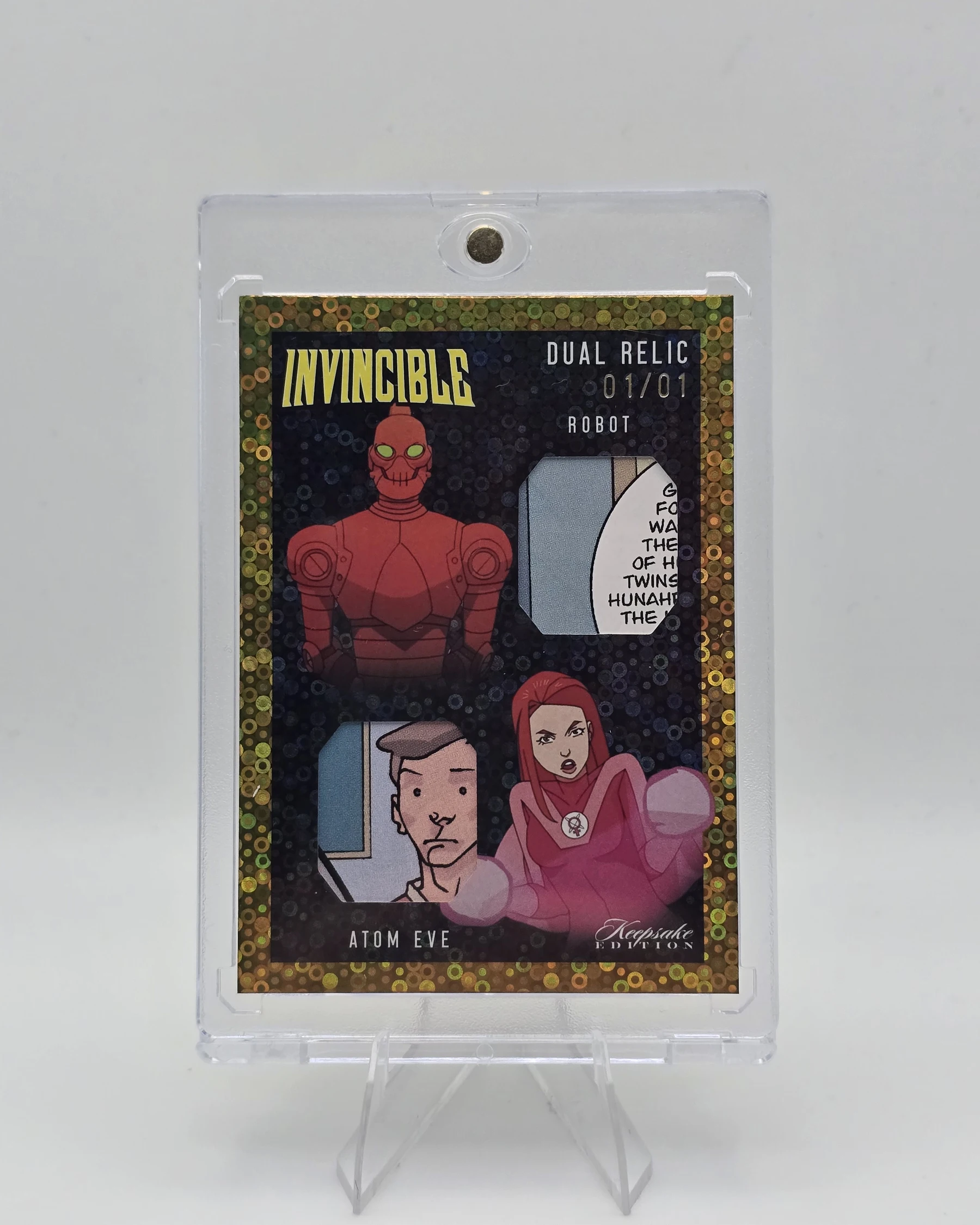
Front: Robot and Atom Eve Authentic Dual Relic, with both material windows visible.
Examine this item ↗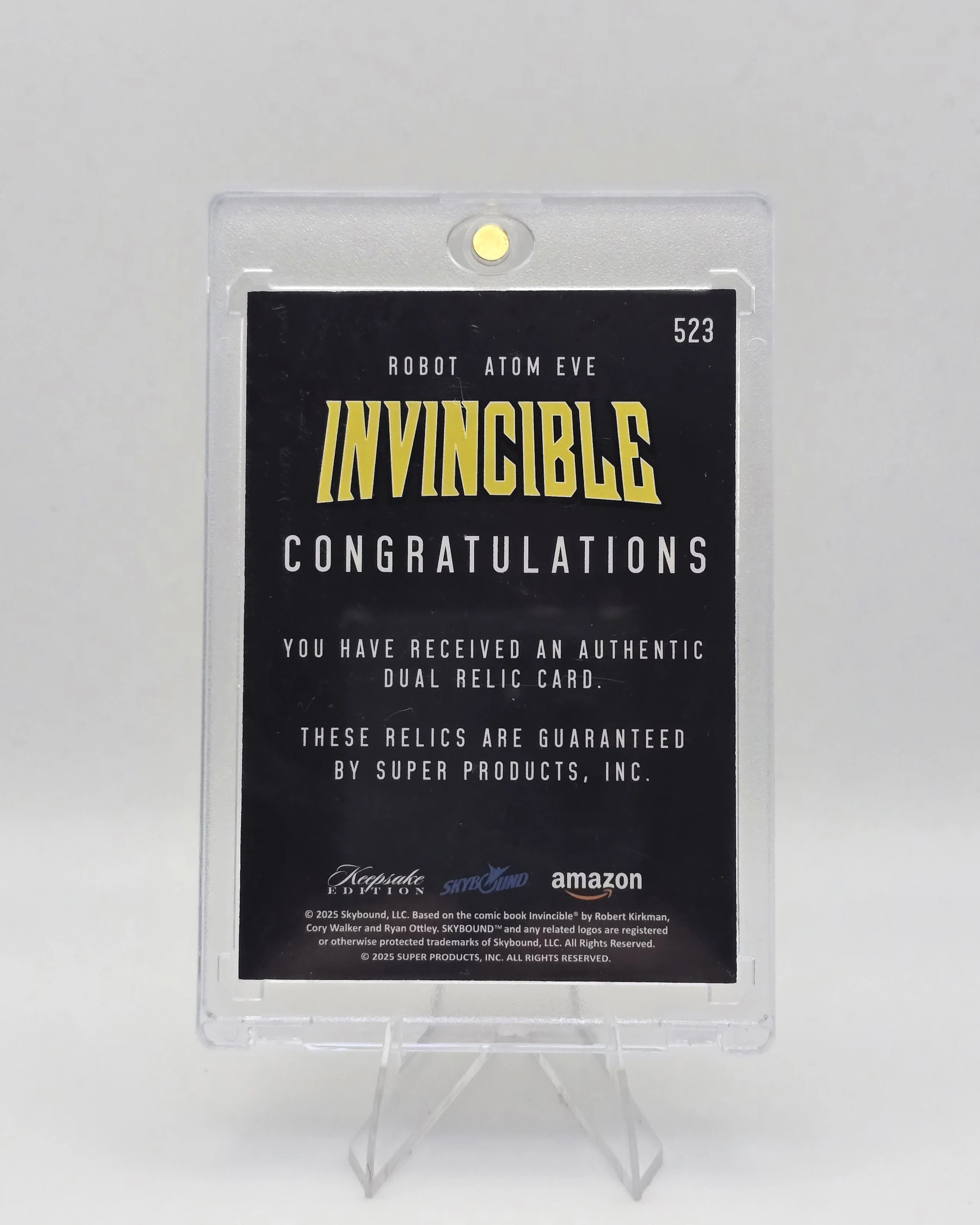
Reverse: save the exact printed details and numbering for this photographed copy.
Examine this item ↗Build one identity line from both sides
Begin with the complete front and back. Record the release, printed subject, card number, card family, parallel treatment and physical serial stamp. A character name alone cannot identify a card: two Omni-Man cards can use different images, belong to different releases and have different numbered versions. Treat seller titles as search clues; use the photographed object and its matching manufacturer checklist to finish the identification.
Keep uncertain fields blank instead of filling them from a similar-looking example. In particular, a shiny surface does not identify a Holo release, a gold border does not establish a /10 print tier, and a loose card does not document its opening box. Original pictures should show every edge and corner, with a separate clear view of any serial stamp or material window.
| Field | What to save |
|---|---|
| Release | Exact family and season or game name |
| Subject | Every printed character on a group card |
| Card number | The checklist design identifier |
| Family | Base, named insert, SignaGraph, relic or other stated type |
| Parallel | Exact named color or finish for this design |
| Serial stamp | The complete numerator and denominator, if present |
Base, parallel and insert answer different questions
Use base for the core checklist design. Use parallel for a version of that design with a changed treatment. Use insert for a separately named design family, which may itself have parallels. The practical consequence is that 'Pop Art' and 'Gold' belong in separate columns: one can describe the design family while the other describes its version. Do not count a color change as a newly introduced character.
Keepsake's VS Collector page gives an especially clear example: its base list includes both Red /10 and Gold /10, while Ultimate Move SSP uses /10 and 1/1 tiers. Equal denominators do not make Red and Gold the same treatment, and an insert does not inherit every base parallel. Use the correct release and subset before attempting a rainbow.
Checklist number, serial number and grade
A checklist number locates a design; a serial such as 03/20 identifies a stated copy within that version's edition. A grade describes condition under the grading service's standards. These are independent fields. A card numbered #63 and stamped 05/10 is not the fifth design in a ten-card checklist, and its serial does not establish a condition grade.
A 1/1 means one copy of the identified version. It does not mean only one card of that character exists across all artwork and products. SP, SSP and SSSP are short-print descriptions; without an explicit number or official production figure, they do not establish a precise total. Record a printed stamp exactly, including leading zeros, and distinguish it from the checklist identifier.
Read special-card wording literally
A relic contains material identified by the card or product documentation. A SignaGraph is a named Keepsake card family; preserve the manufacturer's wording and distinguish laser or printed treatments from an expressly described on-card signature. A SignaPatch combines the named signature treatment with a material component. Single, dual, triple and quad describe the stated configuration, rather than a serial tier.
For your first catalog entry, save the original photographs, copy the exact printed title and number, link the official release page, and write down unresolved details. Repeat that procedure for the reverse. This small record becomes a usable checklist and makes later comparisons much easier than an inventory of abbreviated marketplace titles.
Sources and checklists
Check manufacturer pages and official references for the current product details. Inventory and condition are confirmed for a specific item before purchase.