PUBLISHED · UPDATED · GUIDE 9 OF 18
Product references reviewed . Manufacturer statements, photographed examples and unresolved details are identified separately.
A Season 1 card, inspected as a card
This photographed 1/1 appears in the Season 1 archive. Its loose-card photos alone do not prove a Holo Breaker or Hobby origin.
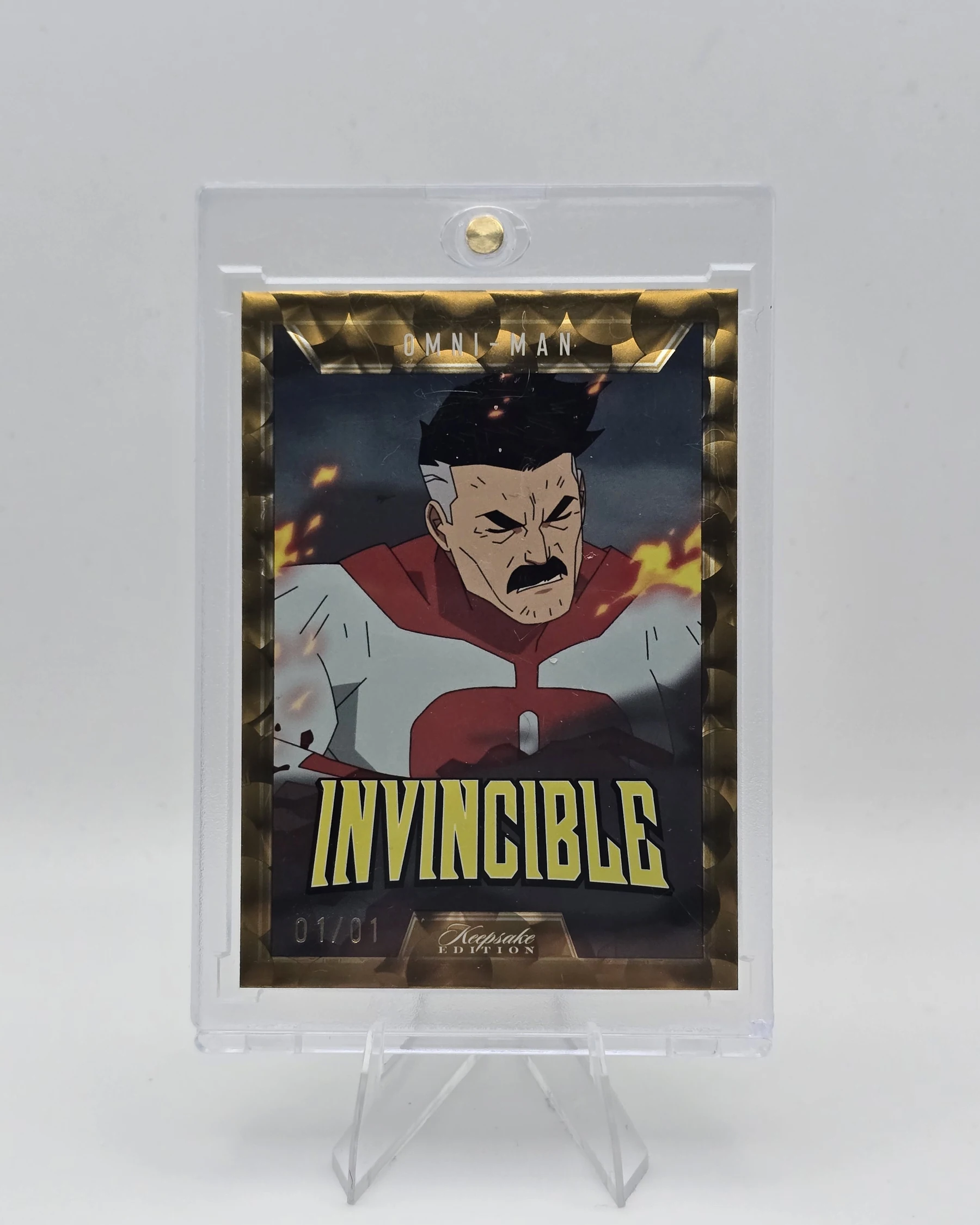
Front: compare foil and artwork.
Examine this item ↗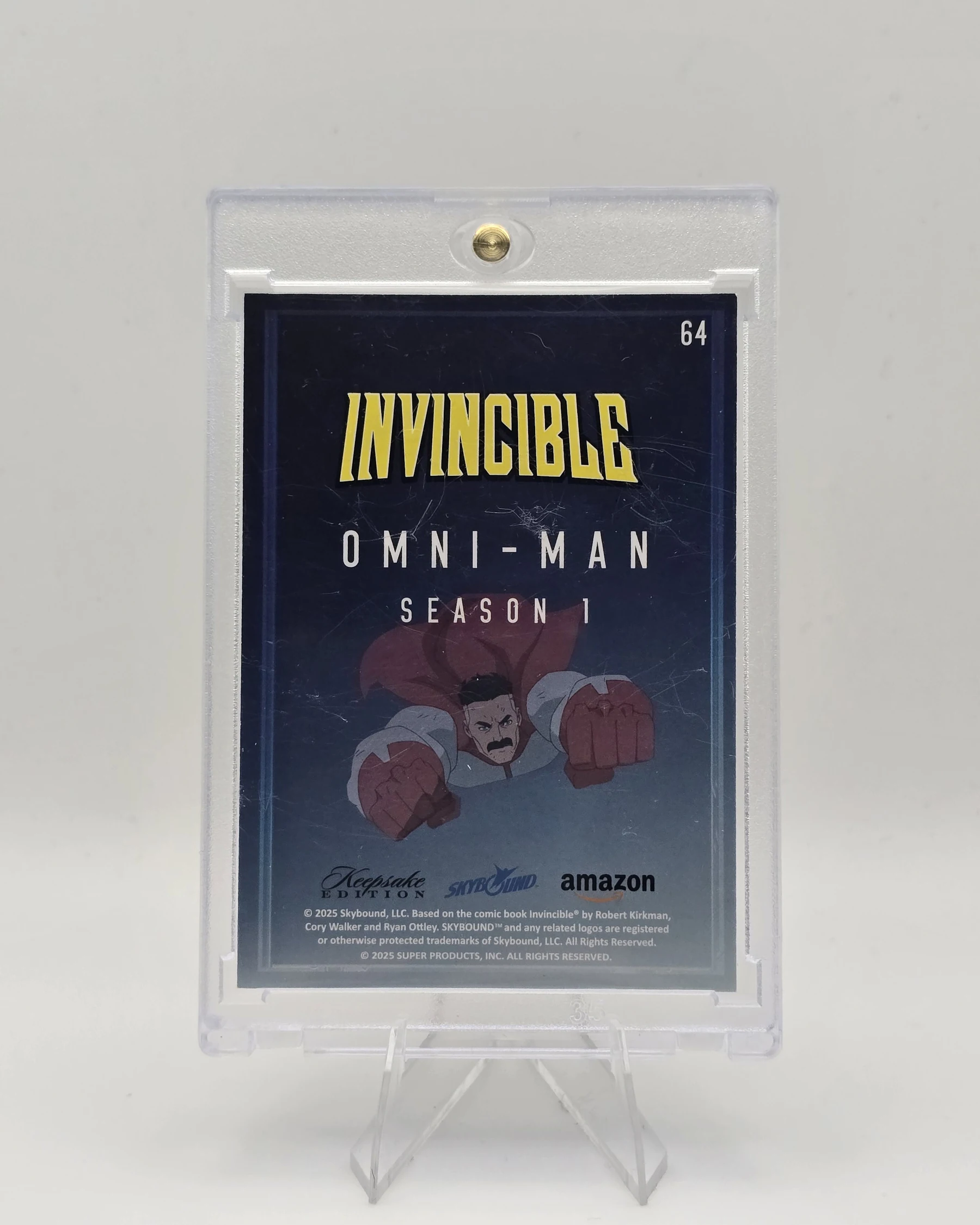
Reverse: inspect the exact photographed copy.
Examine this item ↗Identify the actual Holo format first
Keepsake lists Season 1 Holo Breaker and Season 1 Holo Hobby as distinct products. Both refer to Season 1 Holo, but the box configurations and the stated chase information differ. A listing that says only Season 1 Holo does not tell you which sealed SKU is in its photos. Check the front, sides, back, and seal; for an opened single, record the set and the specific variant printed on the card instead of assuming the box it came from.
Holo also differs from Season 1 Premiere. Similar character names, a gold treatment, or a one-of-one serial do not move a card between releases. When you make a collection spreadsheet, use one field for set, a separate field for Breaker or Hobby association when it is documented, and another for the card's own insert or parallel name. An exact card can be identifiable even if its opening box was never recorded.
Breaker and Hobby packaging compared
Keepsake's Holo Breaker single-box page lists two packs with four cards in each and two hits per box. Its Holo Hobby ten-box case page describes the individual Hobby box as twelve packs with four cards in each and two relics per box. A hit and a relic are not equivalent wording: the Breaker page does not say its two hits must be two relic cards. Do not silently substitute one description for the other when explaining a seller's box.
| Format | Per-box contents | Specific wording | Source context |
|---|---|---|---|
| Holo Breaker | 2 packs × 4 cards | 2 hits per box | Single-box listing |
| Holo Hobby | 12 packs × 4 cards | 2 relics per box | Ten-box case listing describes each box |
Read Breaker case averages as averages
Keepsake's Breaker page estimates, per case on average, eight to twelve numbered parallels to /33 or less, four to five laser SignaGraphs, and twenty relics; it places gemstones at about every two to three cases and also mentions two to five additional numbered cards per case. The page explicitly warns that case-level results are not guaranteed in a particular box. A collector buying one Breaker box cannot divide those averages into a personal guarantee.
Ask which sealed unit is being offered: a single box, a full factory case, or loose boxes from an opened case. Case averages describe a larger sample; they do not reveal what remains after other boxes from that case were opened. They also cannot authenticate an individual card. For a specific chase, record the precise checklist entry and decide whether buying that known single is more suitable than buying an unknown sealed outcome.
What the Hobby listing specifically calls out
The Holo Hobby case listing promotes Hobby-exclusive Gold Holos numbered /10 and a Turn Engine 1/1. It says laser SignaGraphs appear three to five times per case on average and identifies an Omni-Man Comic #1 first-edition Gold Laser SignaPatch numbered /10 as a named chase. These are product-page descriptions, not evidence that every photographed gold card is from Hobby or that every box contains an autograph.
Be especially careful with Gold. The color word alone cannot identify the release, insert, or serial tier; one listing's special Gold Holo /10 does not make every gold-toned card a /10. A 1/1 Turn Engine is a named target, not a generic title for all 1/1’s. Consult the manufacturer-linked checklist for the exact entry, then compare the front and back of the card being offered.
How to identify a photographed single
Invincible1of1's Season 1 cards and Holo boxes collection includes photographed singles such as one-of-one foils, multi-character SignaGraphs and relics, plus recorded pieces and sealed formats. The photographs show individual cards; they do not establish a Holo Breaker or Hobby pull for a particular loose card. Check the number and subtype in the manufacturer checklists, then document the box source only when an opening record or other reliable provenance ties it to that copy.
Read the front for the design and printed title, then the reverse for the precise wording, subject, and card number. Find a serial stamp on the actual object and distinguish 03/10, which is one copy in an edition of ten, from a checklist number such as card #10. Capture the entire border in a straight-on image with a little of the original background visible. A tight crop can conceal edge wear or remove part of the card itself.
Do not turn an archive label into a production total
A photograph can establish a particular card design and legible serial exists; a specific parallel designation still needs the matching manufacturer entry when the card does not print that name. The archive does not establish how many Holo cards were produced across Breaker and Hobby, how many unique characters appear, or whether the owner has a complete rainbow. The manufacturer-linked Holo sheet has 600 numbered entries, including 150 Base rows, plus separate Comic #1 Omni-Man and 4D-01 Invincible rows. State whether those special rows are included whenever giving a total, and do not turn 150 Base entries into a claim of 150 distinct characters.
That sheet names Base, Silver, Blue, Yellow, Red, Blood Splatter Lava, Yellow Lava, Red Lava and Black treatments for base entries, but its columns do not supply universal serial print runs for those names. A photographed /10 proves the denominator of that physical variant; it does not set the run of every card sharing a color. Keep official checklist rows, observed card photos and manufacturer box descriptions in separate evidence columns.
Likewise, a /10 stamp describes the edition for that one design or parallel. It does not mean there are only ten cards in the release, or that /10 always outranks a visually distinct 1/1 for every collector's goal. Scarcity is one dimension. The subject, material, condition, documented provenance, and actual comparable sales may matter more to a particular buyer. Make the collecting objective explicit before ranking chases.
A decision checklist for either format
For a sealed box, identify Breaker or Hobby from the actual packaging; ask for every side and the unbroken seal; verify whether the offer is one box or a case; record any dents, shrink-wrap tears, or opened-case provenance. Compare that exact format to the corresponding Keepsake page. Published case averages help describe possibilities, but your budget should allow for a box that does not contain your target card.
For an already identified single, prioritize full front and back photos, readable serial, surfaces, corners, and the precise release name. If a seller calls an item a Hobby exclusive, ask for the supporting checklist identity instead of inferring from a color. For further research, use the Holo archive as an illustrated example gallery, the parallel guide for terminology, and the protection guide to compare condition and storage.
Sources and checklists
Check manufacturer pages and official references for the current product details. Inventory and condition are confirmed for a specific item before purchase.